Mold Removal FAQ Charleston SC | Costs, Testing & Safety
Have questions about mold in your home or business? You’re not alone.
This FAQ page covers the most common questions Charleston property owners ask about mold inspection, testing, remediation, cleaning, costs, insurance, and prevention.
If you need fast answers or professional help, Classic Mold Removal Charleston SC is available 24/7.
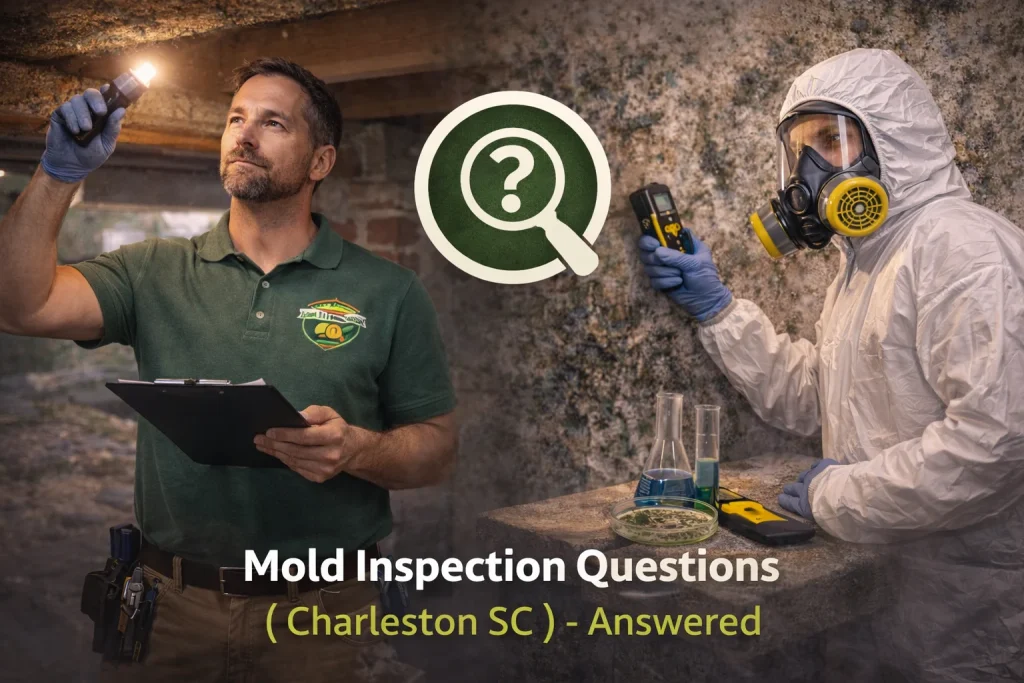
Mold Inspection Questions ( Charleston SC ) - Answered
Do I need a mold inspection in Charleston SC?
Yes, you should consider a mold inspection in Charleston, SC if you notice musty odors, past water damage, allergy symptoms indoors, or visible staining. Charleston’s humid climate makes hidden mold growth common, even in well-maintained homes.
What does a professional mold inspection include?
A professional mold inspection typically includes a visual evaluation, moisture detection, identification of high-risk areas, and recommendations for testing or remediation if needed. Some inspections also include air or surface sampling for lab analysis.
How long does a mold inspection take?
Most mold inspections take between 60 and 90 minutes, depending on the size of the property and whether crawlspaces, attics, or HVAC systems are involved.
How much does a mold inspection cost in Charleston?
The cost of a mold inspection in Charleston usually ranges from $300 to $600, depending on property size, number of samples collected, and inspection complexity. Exact pricing is best confirmed through an on-site evaluation.
Is mold inspection the same as mold testing?
No. A mold inspection identifies moisture problems and visible mold risks, while mold testing involves collecting air or surface samples to confirm mold type and spore levels through laboratory analysis.
Can mold be present even if I don’t see it?
Yes. Mold often grows behind drywall, under flooring, inside crawlspaces, attics, and HVAC systems long before it becomes visible. A professional inspection helps uncover these hidden issues early.
What areas of the home are checked during an inspection?
A mold inspection commonly checks bathrooms, basements, kitchens, crawlspaces, attics, laundry rooms, around windows, and any area with past leaks or high humidity.
Do inspectors check crawlspaces and attics?
Yes. Crawlspaces and attics are two of the most common places for mold growth in Charleston homes because moisture and poor ventilation often go unnoticed in these areas.
Can you inspect HVAC systems for mold?
Yes. HVAC inspections are important because mold spores can travel through ductwork and vents. Inspectors may check air handlers, vents, and condensation-prone areas for signs of contamination.
What tools are used during a mold inspection?
Professional mold inspectors often use moisture meters, infrared cameras, hygrometers, air sampling pumps, surface swabs, and flashlights to detect mold-friendly conditions and hidden growth.
Can you detect mold behind walls?
Yes. While mold behind walls isn’t always visible, inspectors can detect it using moisture readings, infrared imaging, wall cavity sampling, and odor patterns that suggest hidden contamination.
Do I need a mold inspection before buying a home?
Yes. A mold inspection before buying a home can prevent costly surprises, especially in humid areas like Charleston, where hidden moisture issues are common in crawlspaces and older buildings.
Should sellers get a mold inspection before listing?
Yes. Sellers often choose a mold inspection before listing to address concerns early, avoid delays during closing, and provide buyers with confidence in the home’s condition.
How often should a home be inspected for mold?
Most homes don’t need annual inspections unless there are ongoing moisture issues. However, inspections are recommended after flooding, major leaks, or if recurring musty odors or allergy symptoms appear.
Do landlords need mold inspections for rental properties?
Yes. Landlords should schedule mold inspections when tenants report damp odors, visible mold, or health concerns. Regular inspections also help prevent liability and property damage in rental units.
Can mold inspections help with insurance claims?
Yes. Mold inspection reports can support insurance claims by documenting moisture sources, the extent of damage, and professional findings—especially after covered events like burst pipes or storm leaks.
Are mold inspections required for commercial buildings?
Not always required by law, but commercial mold inspections are strongly recommended for offices, schools, restaurants, healthcare facilities, and rental properties to protect indoor air quality and reduce liability.
What is a certified mold inspector?
A certified mold inspector is a trained professional who follows industry standards to identify mold growth, moisture conditions, and contamination risks. Certification shows the inspector has proper education and expertise.
How do I choose the best mold inspector in Charleston?
To choose the best mold inspector in Charleston, look for local experience, strong reviews, certified training, transparent pricing, lab-backed testing options, and a company that offers honest guidance without scare tactics.
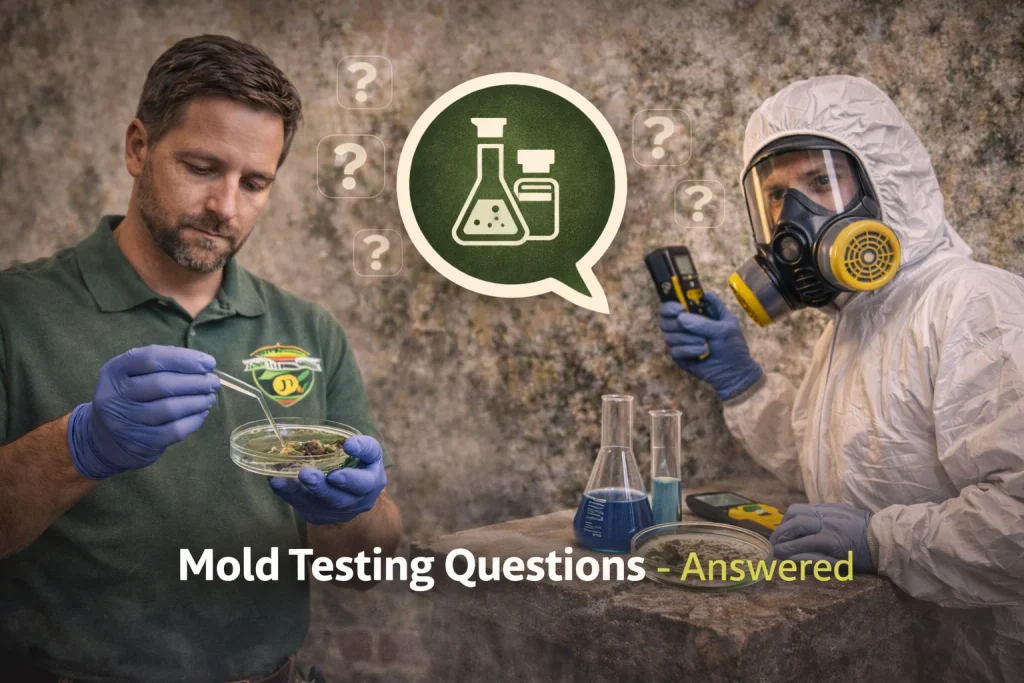
Mold Testing Questions - Answered
What is mold testing, and how does it work?
Do I need mold testing if I already see mold?
Yes. Seeing mold visually confirms growth, but testing identifies the specific types and concentrations of spores, which guides the best cleanup and prevention plan.
How accurate is mold testing?
Professional mold testing is highly accurate when done with proper sampling methods and lab analysis. Certified inspectors use multiple sample types to reduce false negatives and assess true contamination levels.
How much does mold testing cost in Charleston, SC?
Mold testing in Charleston, SC, typically ranges from $250 to $600,+ depending on the number of samples, property size, and whether commercial testing is needed. A detailed quote usually requires an initial inspection.
What is included in mold testing services?
Typical mold testing includes:
- Visual inspection
- Air sampling
- Surface or swab sampling
- Lab analysis
- Lab report with species identification and spore counts
- Recommendations for next steps
What is the difference between air testing and surface testing?
Air testing measures airborne spores to evaluate overall indoor air quality, while surface testing analyzes swabs or tape lifts from specific spots to confirm mold on surfaces.
How long does it take to get mold test results?
Lab results usually take 24–72 hours after samples are collected, depending on the lab workload and the type of tests ordered.
What types of mold can testing identify?
Mold testing can identify common indoor molds such as Aspergillus, Penicillium, Cladosporium, Alternaria, and Stachybotrys (black mold), among others. Labs report species and spore concentrations.
Can mold testing detect black mold?
Yes. Professional mold testing can detect Stachybotrys — commonly known as black mold — along with other mold types when samples are analyzed by an accredited laboratory.
Is mold testing safe for children and pets?
Yes. Mold testing is non-invasive and safe for families, including children and pets. Technicians simply collect air and surface samples without harmful chemicals.
Do you offer mold testing near me in Charleston?
Yes. We provide local, professional mold testing services throughout Charleston, including residential homes, commercial buildings, and frequently searched areas for “mold testing near me.”
Can mold testing be done in commercial buildings?
Yes. Mold testing can be performed in commercial spaces like offices, schools, retail locations, warehouses, and hospitality environments to assess indoor air quality and contamination.
Do you provide clearance testing after remediation?
Yes. Clearance testing is offered after mold remediation to verify that mold levels have returned to acceptable standards and that cleanup was successful.
Are DIY mold test kits reliable?
DIY mold kits may indicate the presence of spores, but they are not reliable for determining species type, spore concentration, or severity. Professional lab testing is more accurate and useful for remediation planning.
What does a mold lab report show?
A mold lab report shows:
- Mold species identified
- Indoor vs outdoor spore comparisons
- Spore counts per cubic meter
- Interpretation of results
- Guidance on severity
This helps professionals choose the right remediation strategy.
Should I test mold before remediation starts?
Yes. Testing before remediation helps confirm the type and extent of contamination so professionals can create an effective removal plan and avoid unnecessary work.
Can mold testing confirm hidden mold problems?
Yes. Mold testing, especially when combined with air sampling and moisture mapping, can indicate hidden mold growth even when nothing is visible.
What is ERMI or PCR mold testing?
ERMI (Environmental Relative Moldiness Index) and PCR (Polymerase Chain Reaction) are advanced tests that analyze mold DNA to identify dozens of species and determine overall mold burden. These are more detailed than standard spore trap tests and are useful in complex cases.
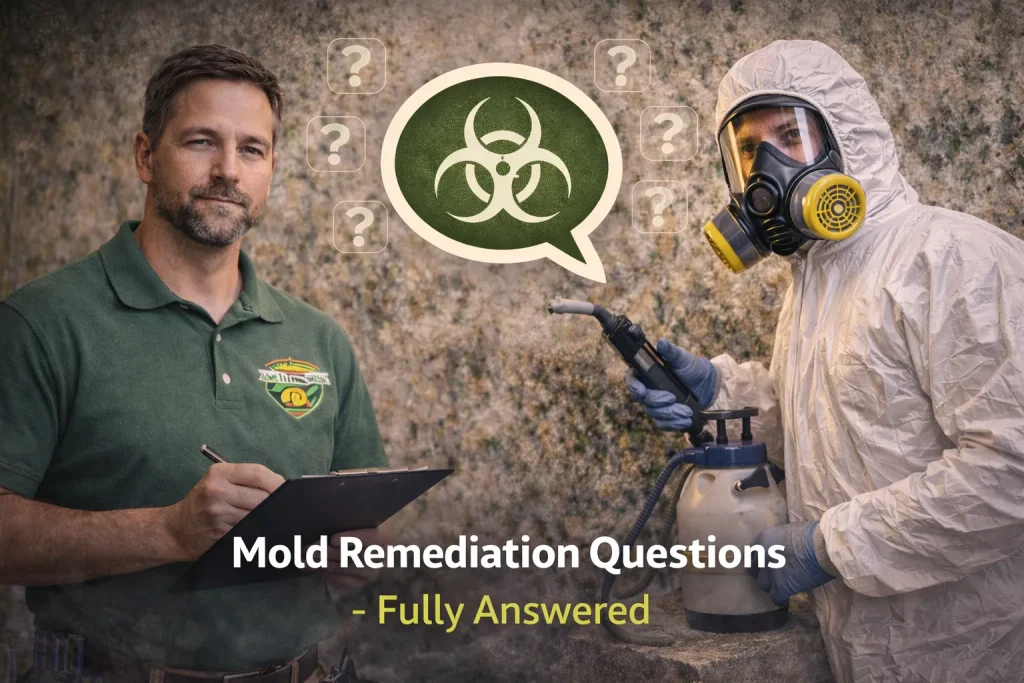
Mold Remediation Questions - Fully Answered
What is mold remediation?
Mold remediation is the process of removing mold growth, treating affected areas, and correcting moisture issues so mold doesn’t return. It includes containment, cleanup, and prevention strategies.
When do I need professional mold remediation?
You need professional mold remediation when mold covers more than a few square feet, is recurring after cleaning, or is linked to water damage, poor ventilation, or indoor air issues.
How do I know if mold remediation is necessary?
Remediation is necessary if testing shows high spore counts, mold is visible on walls or structures, or if there are musty odors, recurring moisture, or health symptoms linked to mold exposure.
How much does mold remediation cost in Charleston, SC?
Mold remediation cost in Charleston, SC, varies widely based on severity, affected area size, and removal complexity. Small jobs may be in the hundreds, while larger projects can range into the thousands of dollars.
What factors affect mold removal pricing?
Key pricing factors include:
- Size of the contaminated area
- Type of materials affected (drywall, insulation)
- Accessibility of the mold
- Need for containment and air filtration
- Whether structural repairs are needed
How long does mold remediation take?
Remediation can take from 1 day to 1+ week. Small, localized jobs finish quickly; widespread issues with extensive moisture or structural damage take longer.
Is mold remediation covered by insurance?
It depends on your policy and the cause. Many homeowner policies may cover mold if caused by a covered peril (like a burst pipe), but not for long-term poor maintenance. Always check your specific policy.
Can mold come back after remediation?
Mold can return if moisture problems aren’t fixed. Professional remediation includes identifying and correcting the cause (leaks, humidity) to help prevent recurrence.
What is the remediation process step-by-step?
A typical process includes:
- Assessment and inspection
- Containment of the affected area
- Removal of moldy materials
- Cleaning and sanitizing surfaces
- Drying and moisture control
- Optional clearance testing
Do you remove mold from drywall and insulation?
Yes. Professionals remove and replace mold-infested drywall and insulation when necessary, as porous materials cannot always be cleaned effectively.
Can mold remediation fix crawlspace mold?
Yes. Crawlspace mold is common in Charleston due to moisture. Remediation involves cleaning, encapsulation, dehumidification, and fixing drainage or ventilation issues.
Do I need to leave my home during remediation?
Not always. For small remediation jobs, occupants can often stay in unaffected areas. For large contaminations or black mold, temporary relocation may be recommended.
How do you prevent mold from spreading during removal?
Professionals use containment barriers, negative air pressure, and HEPA filtration to prevent spores from spreading to clean areas of the home during remediation.
Is black mold remediation different from regular mold removal?
Black mold remediation follows the same professional steps but may include more extensive containment and specialized cleanup due to higher perceived health risks.
Can mold remediation improve indoor air quality?
Yes. Removing mold and fixing moisture sources greatly improves indoor air quality by reducing spore counts and eliminating hidden contamination.
Do you provide commercial mold remediation in Charleston?
Yes. Professional remediation services are available for commercial buildings, including offices, retail spaces, schools, hospitality venues, and property management properties.
What certifications should a mold remediation company have?
Look for companies with certified professionals, industry-aligned training (e.g., IICRC), and experience with proper containment, air quality safety standards, and accredited labs for related testing.
Is remediation safe for kids, seniors, and pets?
Yes, when done properly. Technicians follow safety protocols and containment procedures to protect occupants, and you will be advised on whether temporary relocation is needed.
What happens after mold is removed?
After removal, you receive a cleanup summary, moisture prevention tips, and may schedule clearance testing to verify mold levels have returned to safe, acceptable standards.
Do you offer post-remediation clearance testing?
Yes. Post-remediation clearance testing ensures the mold cleanup was successful and confirms that spore levels are within safe ranges before finalizing the project.
Mold Cleaning Questions - Answered
What is the difference between mold cleaning and remediation?
Mold cleaning focuses on removing visible mold from surfaces, while remediation addresses the source of mold growth, contains contamination, and prevents it from spreading or returning.
Can mold be cleaned without removing drywall?
Sometimes. If mold is only surface-level and limited, it can be cleaned. But if mold has penetrated porous materials like drywall, removal and replacement may be necessary for thorough treatment.
Is mold cleaning safe for bathrooms and kitchens?
Yes. Professional mold cleaning can safely remove mold from bathroom tiles, grout, cabinets, and kitchen surfaces using industry-approved methods.
How much does mold cleaning cost in Charleston?
Mold cleaning cost in Charleston varies by area size and severity. Small patches often cost a few hundred dollars, while larger or harder-to-reach jobs are more. A professional evaluation gives the most accurate quote.
Do you clean mold from ceilings and walls?
Yes. Professionals can clean mold from ceilings and walls if the growth is surface-level. For deep or extensive contamination, remediation rather than just cleaning may be needed.
Can mold cleaning remove stains completely?
Often, yes. Professional cleaning uses targeted solutions that minimize or remove staining, but in cases with deep discoloration, surface replacement (drywall or painting) may be recommended.
What cleaning products do professionals use?
Professionals use EPA-approved antimicrobial cleaners, HEPA-safe solutions, and specialized detergents designed for mold removal without damaging materials.
Is bleach effective for mold cleaning?
Bleach may lighten surface stains, but it does not eliminate mold roots behind materials and adds moisture. Experts recommend professional solutions that treat mold safely and prevent regrowth.
Can surface mold return after cleaning?
Yes. Surface mold may return if the underlying moisture problem isn’t resolved. Cleaning removes visible growth, but controlling humidity, leaks, and ventilation prevents recurrence.
Do you offer mold cleaning for HVAC vents?
Yes. Mold cleaning can include HVAC vent and duct cleaning, especially when mold spores circulate through your air system and affect indoor air quality.
Is mold cleaning enough for small mold patches?
For small, isolated patches on hard surfaces, professional mold cleaning is often sufficient. If mold has spread behind materials, remediation may be recommended.
Do you provide post-remediation mold cleaning?
Yes. After remediation, our team can perform follow-up cleaning to treat remaining surfaces, restore area’s appearance, and improve indoor air quality.
Can mold cleaning improve air quality?
Yes. Removing surface mold and treating affected areas reduces spore counts and improves indoor air quality — especially when combined with proper moisture control.
Do you offer residential and commercial mold cleaning services?
Yes. We provide mold cleaning for both homes and commercial spaces, including offices, restaurants, rental units, and retail environments.
How long does mold cleaning take?
Mold cleaning typically takes a few hours for small areas. Larger or more complex projects can take a day or more, depending on size, location, and accessibility.
Emergency Mold Removal Questions - Answered
Do you offer emergency mold removal in Charleston, SC?
Yes. We provide emergency mold removal in Charleston, SC, with fast response and professional service to help stop mold from spreading and protect your property.
What qualifies as a mold emergency?
A mold emergency includes sudden mold growth after flooding, storm damage, burst pipes, sewage backups, or any situation where mold is actively spreading and affecting indoor air quality.
How fast can mold spread after water damage?
Mold can begin growing within 24 to 48 hours after water damage, especially in humid environments like Charleston. Quick drying and professional response are critical.
Can you respond 24/7 to mold problems?
Yes. Our team is available 24/7 for urgent mold situations, including emergency inspections, remediation, and moisture control support.
What should I do immediately after discovering mold?
If you discover mold, you should:
- Avoid disturbing the area
- Stop the moisture source if possible
- Ventilate safely if conditions allow
- Contact a mold specialist for professional evaluation
Do you provide emergency remediation after flooding?
Yes. Flooding often leads to hidden mold growth, and we offer emergency remediation services to remove contamination, dry affected areas, and prevent long-term damage.
Can mold grow within 24–48 hours?
Yes. Mold can start growing in as little as 24–48 hours when moisture is present, which is why immediate action after leaks or flooding is so important.
Should I call a mold specialist after a burst pipe?
Yes. After a burst pipe, water can soak drywall, insulation, and flooring — creating perfect conditions for mold. Calling a mold specialist early can prevent major contamination.
Is emergency mold removal more expensive?
Emergency mold removal may cost more due to after-hours response, rapid containment needs, and severity of damage. However, fast action often reduces overall repair costs.
Can you handle storm-related mold issues in Charleston?
Yes. Storms and coastal humidity make mold problems common in Charleston. We respond quickly to storm-related mold outbreaks, water intrusion, and emergency cleanup needs.
Black Mold Questions - Answered
How do I know if I have black mold?
Black mold may appear as dark green or black patches on drywall, ceilings, or damp surfaces, often accompanied by musty odors and allergy-like symptoms. Testing is the only way to confirm the exact type.
Is black mold dangerous?
Black mold can be a health concern, especially for individuals with asthma, allergies, or weakened immune systems. Professional removal is recommended whenever black mold is suspected.
Do you test specifically for black mold?
Yes. Mold testing can identify Stachybotrys, commonly known as black mold, along with other mold species through accredited lab analysis.
How much does black mold removal cost?
Black mold removal cost depends on the size of the affected area, material damage, and containment needs. Small jobs may cost hundreds, while larger remediation projects can reach several thousand dollars.
Can black mold spread through HVAC systems?
Yes. Mold spores, including black mold, can spread through HVAC ductwork and vents, impacting indoor air quality throughout the building.
What should I do if I find black mold in my home?
If you find black mold:
- Avoid touching or scrubbing it
- Keep the area contained
- Address moisture or leaks immediately
- Contact a professional mold remediation company for safe removal
Do you offer black mold remediation in Charleston?
Yes. We provide professional black mold remediation in Charleston, using proper containment, HEPA filtration, and industry-approved removal methods to eliminate mold safely.
Commercial Mold Service Questions - Answered
Do you provide mold services for businesses in Charleston?
Yes. We provide professional mold inspection, testing, remediation, and cleaning services for commercial properties throughout Charleston, SC, including offices, retail spaces, and rental buildings.
Can mold affect employees and customers?
Yes. Mold exposure can trigger allergies, respiratory symptoms, and poor indoor air quality, which may impact employee productivity, customer comfort, and overall building safety.
Do commercial buildings require mold inspections?
Commercial mold inspections are not always legally required, but they are strongly recommended for health, liability protection, and maintaining safe indoor environments—especially in high-humidity areas like Charleston.
How do you handle mold remediation in occupied buildings?
We use strict containment barriers, HEPA air filtration, and controlled work zones to prevent mold spores from spreading, allowing remediation to be completed safely even in occupied spaces.
Do you offer after-hours mold remediation for businesses?
Yes. We offer flexible scheduling, including after-hours and weekend remediation options, to minimize disruption to daily business operations.
Can mold cause liability issues for property managers?
Yes. Mold problems can lead to tenant complaints, health concerns, property damage, and potential legal liability if not addressed promptly and professionally.
Do you service schools, restaurants, and offices?
Yes. We provide commercial mold services for schools, daycare centers, restaurants, hospitality properties, medical facilities, offices, and multi-unit buildings.
Do you provide documentation for compliance and insurance?
Yes. We provide professional inspection reports, lab results, remediation documentation, and clearance testing records that can support insurance claims, compliance needs, and property transactions.
Mold Prevention Questions - Answered
What causes mold growth in Charleston homes?
Mold growth in Charleston is most commonly caused by high humidity, water leaks, poor ventilation, flooding, and moisture buildup in crawlspaces, attics, and bathrooms.
How can I prevent mold from returning?
To prevent mold from returning, you should fix moisture problems, control indoor humidity, improve airflow, dry water-damaged areas quickly, and schedule professional inspections if mold has occurred before.
What humidity level causes mold indoors?
Mold thrives when indoor humidity stays above 60%. Keeping humidity between 30% and 50% is ideal for preventing mold growth.
Do dehumidifiers help prevent mold?
Yes. Dehumidifiers are one of the most effective ways to reduce indoor moisture, especially in basements, crawlspaces, and humid Charleston summers.
How do I stop mold in crawlspaces?
Stopping crawlspace mold requires moisture control, proper ventilation or encapsulation, repairing leaks, and sometimes professional remediation to remove existing contamination.
What are the best ways to improve ventilation?
Improving ventilation includes using bathroom and kitchen exhaust fans, ensuring HVAC airflow is balanced, opening vents properly, and addressing stagnant, humid areas like attics and crawlspaces.
How do I prevent mold after water damage?
After water damage, mold prevention requires drying the area within 24–48 hours, removing wet materials if necessary, using dehumidifiers, and scheduling professional mold inspection if moisture penetrates walls or flooring.
Cost & Insurance Questions - Answered
What is the average mold removal cost in Charleston SC?
The average mold removal cost in Charleston, SC, varies based on severity and size. Small jobs may cost a few hundred dollars, while larger remediation projects can range from $1,500 to $6,000+, depending on materials affected and containment needs.
Is mold testing included in remediation pricing?
Sometimes. Basic remediation estimates may include limited testing, but detailed mold testing and post-remediation clearance testing are often priced separately. Always ask what is included in your quote.
Does homeowners' insurance cover mold removal?
Homeowners’ insurance may cover mold removal only if it results from a covered event, such as a burst pipe. Mold caused by long-term moisture, flooding, or poor maintenance is usually not covered.
Do you provide free estimates for mold remediation?
Yes. We provide clear, no-obligation estimates after an initial evaluation so property owners understand the scope, cost, and recommended next steps before work begins.
Can mold damage reduce home value?
Yes. Mold can significantly reduce home value by raising health concerns, delaying sales, and requiring costly remediation. Addressing mold early helps protect property value and buyer confidence.
Is mold removal tax-deductible for businesses?
In many cases, mold removal may be tax-deductible as a business maintenance or repair expense. Business owners should consult a tax professional to confirm eligibility.
Do you offer affordable mold removal options?
Yes. We offer affordable mold removal options tailored to the severity of the problem, with transparent pricing and recommendations designed to avoid unnecessary work.
Should buyers request mold testing before closing?
Yes. Mold testing before closing helps buyers identify hidden moisture or mold issues that may not appear during a standard home inspection, especially in humid areas like Charleston.
Can mold fail a home inspection?
Yes. Significant mold growth, moisture damage, or unsafe indoor air conditions can cause a home inspection to raise red flags or fail, depending on severity.
Do you provide mold reports for real estate transactions?
Yes. We provide professional mold inspection and testing reports suitable for buyers, sellers, real estate agents, and lenders during property transactions.
How quickly can you inspect a home before closing?
In many cases, we can schedule and complete mold inspections within 24–72 hours, depending on availability and urgency related to closing timelines.
Can sellers fix mold issues before listing?
Yes. Sellers often choose to address mold issues before listing to avoid delays, reduce negotiation friction, and provide buyers with documentation of professional remediation.
What happens if mold is found during escrow?
If mold is found during escrow, buyers may request remediation, negotiate repairs or pricing, or delay closing until the issue is resolved. Professional reports help guide fair decisions.